
Table of Contents
Summary
In this blog, we’ll break down how a solar electrical system works, what components it includes, and why it’s one of the smartest and most eco-friendly investments in today’s world.
Introduction
As energy costs rise and sustainability becomes a priority, more homeowners and businesses are turning to solar energy to power their everyday lives. But many people still wonder how a solar electrical system actually works.
If you’ve seen solar panels on rooftops and thought they simply “absorb sunlight and make electricity,” you’re partly right but there’s a lot more happening behind the scenes.
What is a Solar Electrical System?
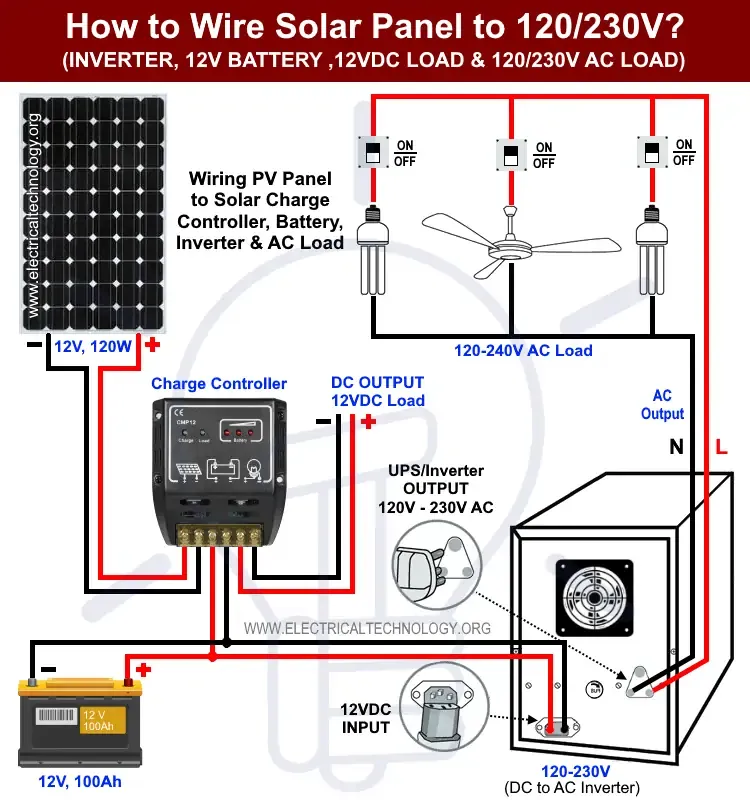
A solar electrical system (also called a solar power system) is a setup that converts sunlight into usable electricity. It allows you to run your lights, fans, appliances, and even entire buildings using clean, renewable energy. It includes key components such as:
- Solar panels that capture sunlight
- Inverters that convert electricity for home use
- Batteries for storage (in some systems)
- Grid connections that balance your power supply
Think of it as your personal mini power plant silently generating electricity every day from the most abundant source of energy we have: the sun.
Main Components of a Solar Electrical System
Solar Panels (Photovoltaic Modules)
Solar panels are made up of photovoltaic (PV) cells that absorb sunlight and convert it into direct current (DC) electricity. The stronger the sunlight, the more power they generate.
Inverter (The Heart of the System)
Your home appliances use alternating current (AC) electricity. The inverter’s job is to convert the DC power from solar panels into AC power making it usable for all your devices.
Mounting Structure
The panels are placed on a sturdy metal frame, tilted at the right angle to capture maximum sunlight throughout the day.
Battery Storage (Optional)
In off-grid or hybrid systems, batteries store excess electricity generated during the day, so you can use it at night or during power cuts.
Charge Controller
It regulates the voltage and prevents overcharging or battery damage.
Grid Connection
In on-grid systems, any extra power you produce is sent back to the main power grid, allowing you to earn credits through net metering.
How Does a Solar Electrical System Work?
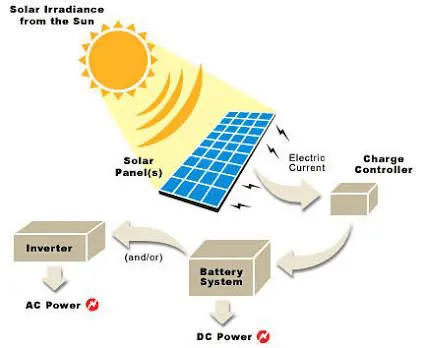
A solar electrical system works through a simple yet efficient step-by-step process that transforms sunlight into usable electricity.
The process begins when sunlight hits the solar panels, which are made up of photovoltaic (PV) cells. These cells absorb sunlight and convert it into direct current (DC) electricity. However, since most home and commercial appliances operate on alternating current, the next stage involves conversion from DC to AC. This is handled by the solar inverter, which converts the DC electricity generated by the panels into AC power, making it suitable for everyday use.
Once the current is converted, the power distribution stage begins. The AC electricity is sent to your building’s main electrical board, where it powers lights, fans, appliances, and other electrical devices. Any extra energy generated is then managed depending on the system type. In off-grid solar systems, this surplus power is stored in batteries for later use, while in on-grid systems, the excess energy is fed back to the grid through a process called net metering, allowing you to earn credits from your electricity provider.
Finally, during night-time or cloudy conditions, when the panels are not producing power, your home automatically switches to draw energy either from the battery backup (if available) or directly from the main power grid. This seamless integration ensures a continuous and reliable power supply throughout the day and night.
Types of Solar Electrical Systems
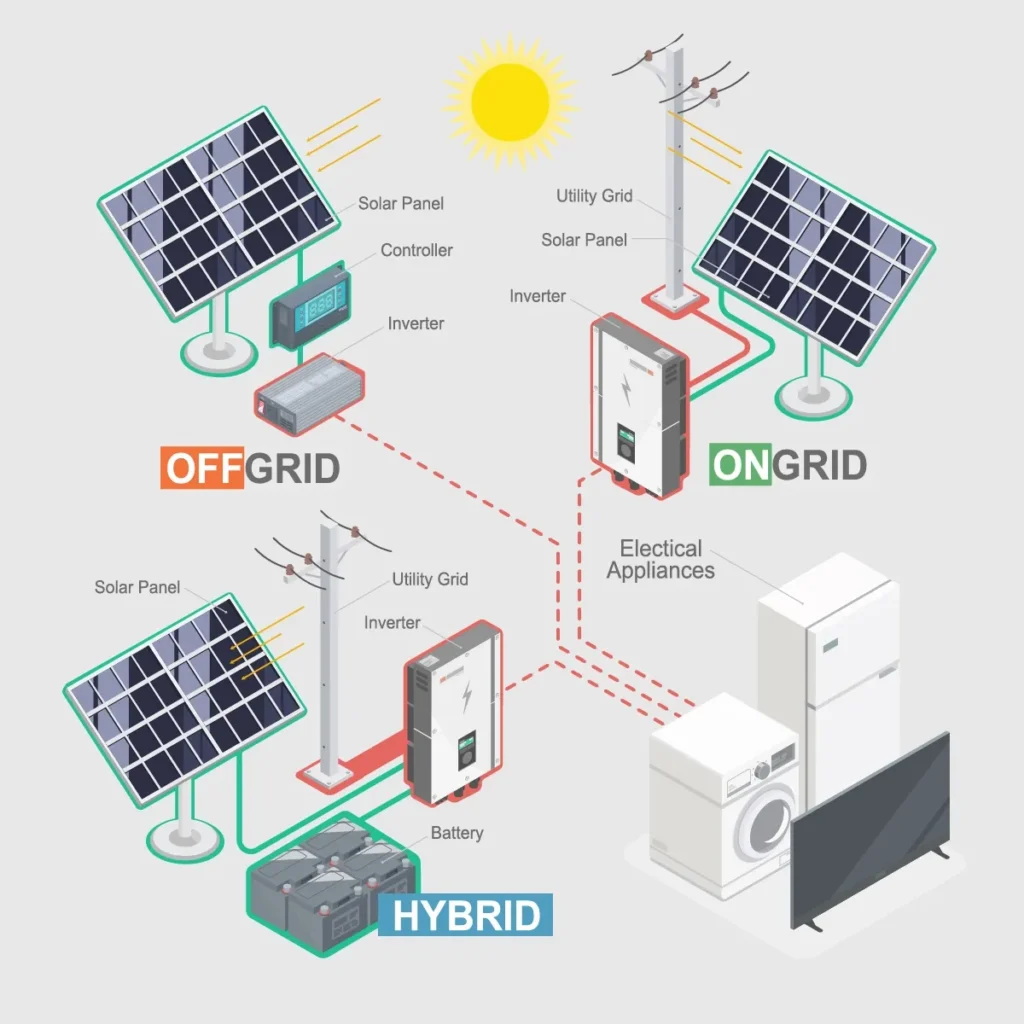
There are mainly three types of solar electrical systems, each designed to meet different energy needs and usage patterns.
On-Grid Solar System
The On-Grid Solar System is directly connected to the main power grid and does not require batteries. It allows you to use solar energy during the day and automatically draw electricity from the grid when solar power is unavailable. One of its key advantages is net metering, where any excess power generated by your solar panels is fed back into the grid, earning you credits on your electricity bill. This system is ideal for urban homes, apartments, and offices, where grid electricity is readily available.
Off-Grid Solar System
The Off-Grid Solar System, on the other hand, works completely independent of the grid. It uses batteries to store excess solar power, which can be used at night or during cloudy days. This system is perfect for remote or rural areas where power cuts are frequent or grid connections are unavailable. It provides complete energy independence but requires proper battery management to ensure consistent performance.
Hybrid Solar System
Lastly, the Hybrid Solar System combines the best features of both on-grid and off-grid setups. It stays connected to the grid while also using batteries for backup power. This ensures a continuous power supply even during grid failures making it ideal for commercial spaces, institutions, and large homes that require reliability and flexibility.
Benefits of Installing a Solar Electrical System
Installing a solar electrical system is not only a responsible environmental choice but also a smart financial investment for the long term. More and more homeowners and businesses are switching to solar because of its remarkable benefits. By generating your own power, you can achieve significant savings on electricity bills, often up to 80%. Beyond financial returns, solar systems are completely environment-friendly, producing zero carbon emissions and helping reduce your overall carbon footprint. They also require minimal maintenance and come with a long lifespan of 20 to 25 years, making them a durable and reliable energy solution.
Additionally, in India, the government provides attractive subsidies and tax benefits to encourage solar adoption, further reducing the overall installation cost. A solar-powered property also gains a higher market value, as buyers increasingly prefer energy-efficient and sustainable homes. And with battery backup options, you enjoy uninterrupted power even during outages. In short, by investing in solar energy, you not only save money and protect the environment but also move one step closer to achieving true energy independence.
Factors to Consider Before Installing a Solar Electrical System
Before installing a solar electrical system, it’s essential to plan your setup wisely to ensure maximum performance and return on investment. Start by analyzing your roof direction and tilt angle, as south-facing roofs with the right inclination receive the most sunlight throughout the day. It’s equally important to ensure a shadow-free area, as obstructions from trees or nearby buildings can significantly reduce the efficiency of your solar panels. Next, assess your energy consumption by calculating your average daily electricity usage — this helps determine the ideal system size and kW capacity that will meet your power needs effectively.
When planning your budget, always choose BIS-certified solar panels and trusted brands to ensure long-term reliability, safety, and quality. Opting for low-cost, uncertified panels might seem economical initially but can lead to poor performance and higher maintenance costs in the future. Finally, seeking professional guidance from an experienced solar provider can make a huge difference. Experts can analyze your site conditions, design the most efficient layout, and install the system correctly ensuring you get the best possible energy output and long-term savings.
Common Misconceptions About Solar Systems
| Myth | Reality |
|---|---|
| Solar power only works in summer | Works year-round, even on cloudy days |
| Solar systems are too expensive | Prices have dropped by over 60% in the last decade |
| Solar panels require a lot of maintenance | They need only basic cleaning |
| Solar systems stop working at night | Batteries or grid connection handle night-time power |
Why Solar Electrical Systems Are the Future of Energy
With global energy demands increasing and environmental concerns growing, solar power is the most practical and sustainable solution. It reduces our dependence on fossil fuels, saves resources, and helps create a cleaner, greener future for generations to come.
In India, government initiatives like Rooftop Solar Yojana and Net Metering Policies make it easier and more affordable for families and businesses to adopt solar power.
Switching to solar is no longer just an environmental choice, it’s a lifestyle upgrade and a step toward energy independence.
Conclusion
Using solar energy is one of many ways to cut back on energy consumption and expenses; however, it is not the sole reason we should use solar. By installing a proper solar electrical system, you will generate not only immediate but also future long-term advantages like a decrease in your monthly utility bills, a markedly enhanced level of energy independence, and perhaps most importantly, a healthier and cleaner living environment for future generations. Today’s solar technology is much safer and more efficient than it was previously and now provides an excellent opportunity to go solar.
If you are prepared to discover the most effective solar option for you, UcEngineer is dedicated to helping you throughout your experience, including the initial site evaluation, installation and continued customer service. You will be able to enjoy a complete experience with the guidance of experienced professionals.