
Table of Contents
Introduction
Are your electricity bills getting higher every month? Do power cuts disturb your daily life? Or maybe you simply want to stop depending on the grid and use clean, free energy from the sun?
If yes, solar energy might be the answer you are looking for.
But when you start researching solar, you quickly run into two big terms — On-Grid and Off-Grid systems. And then someone mentions an EPC Solar company, and suddenly it all feels complicated.
This guide breaks everything down in simple, easy-to-understand language. By the end, you will know exactly what these systems mean, how they work, and which one makes the most sense for your home or business.
What Is an EPC Solar System - And Why Does It Matter?
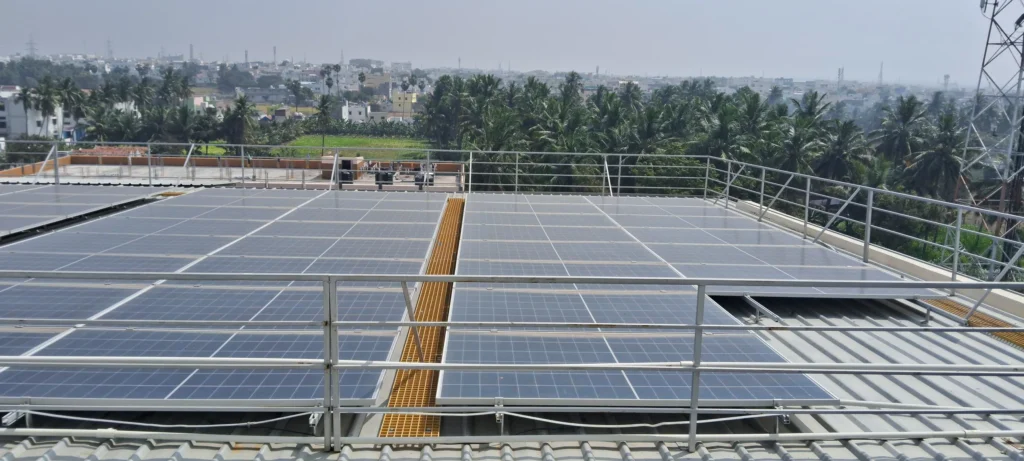
EPC stands for Engineering, Procurement, and Construction. An EPC Solar company is a team that handles your entire solar project from start to finish. They design the system for your specific needs, source all the equipment (panels, inverters, batteries), and then install everything properly at your location.
Think of them as a one-stop shop for solar. Instead of hiring a separate designer, a separate supplier, and a separate installer, an EPC Solar contractor does it all under one roof. This saves you time, reduces confusion, and ensures accountability, because one team is responsible for everything.
Now, whether you go for an On-Grid or Off-Grid setup, hiring the right EPC Solar company is one of the most important decisions you will make.
What Is an On-Grid Solar System?
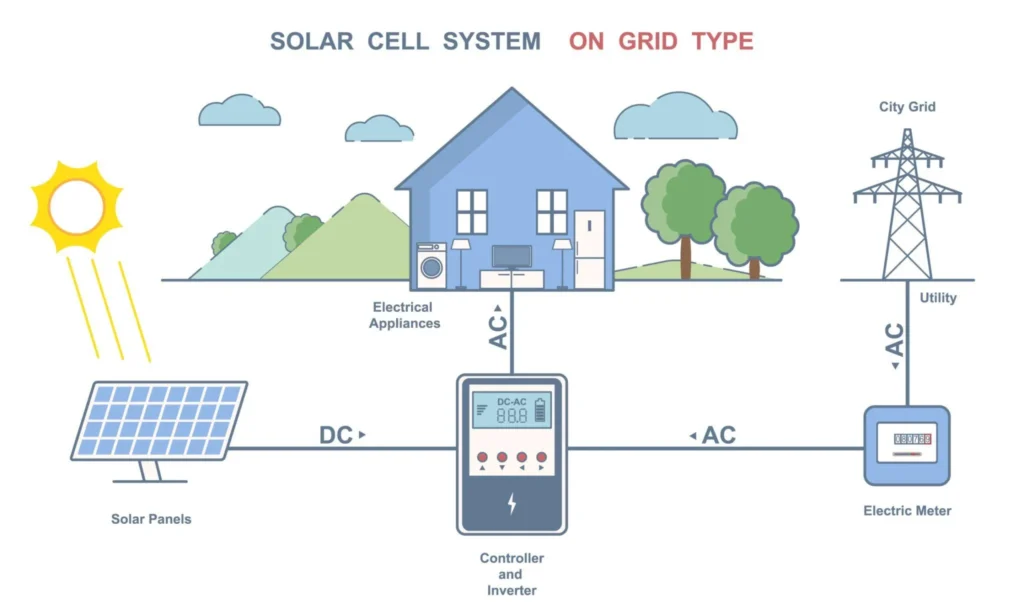
An On-Grid solar system is connected to your local electricity grid — the same network that supplies power to your home right now.
Here is how it works in simple steps:
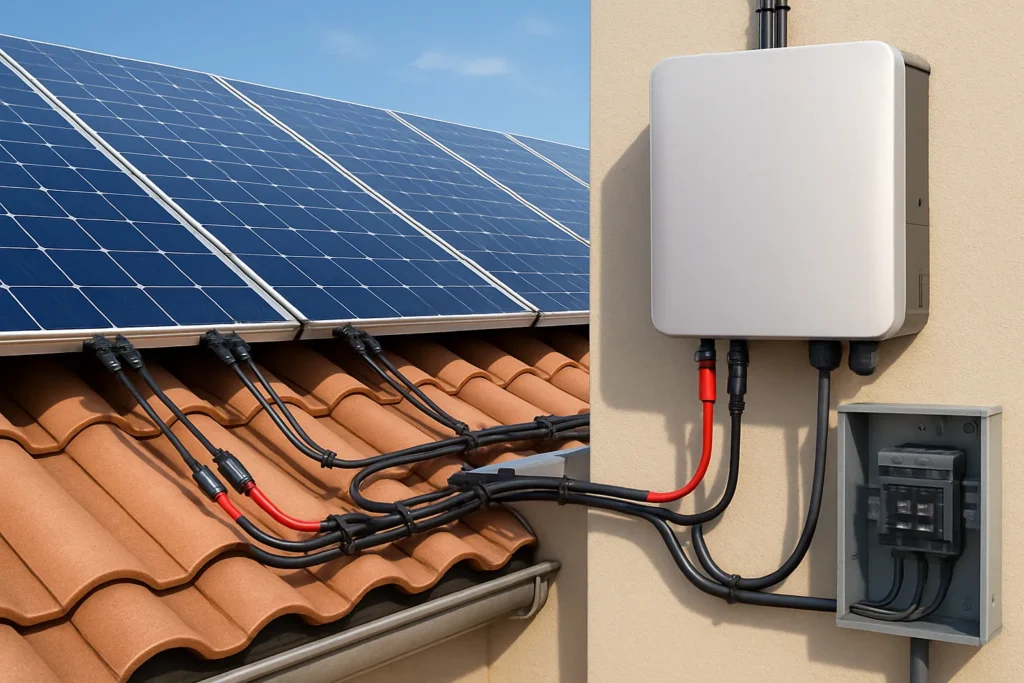
- Solar panels on your roof absorb sunlight and convert it into electricity.
- This electricity passes through an inverter, which converts it into a form your home can use.
- Your home uses this solar power first.
- If your panels produce more electricity than you need, the extra power is sent back to the grid.
- If your panels do not produce enough (like on a cloudy day), your home automatically draws power from the grid.
The best part? Most On-Grid systems come with something called net metering. This means when you send extra power to the grid, your electricity provider gives you credit for it. Those credits reduce your monthly electricity bill — sometimes significantly.
On-Grid systems work best for:
- Homes and businesses in cities or towns with a reliable electricity supply
- People who want to reduce their electricity bills without spending too much upfront
- Those who do not need power during a complete grid outage
One important thing to know: a standard On-Grid system does not work during a power cut. Since it is connected to the grid, it shuts down automatically for safety reasons when the grid goes down. If backup power during outages is important to you, this is something to discuss with your EPC Solar provider.
What Is an Off-Grid Solar System?
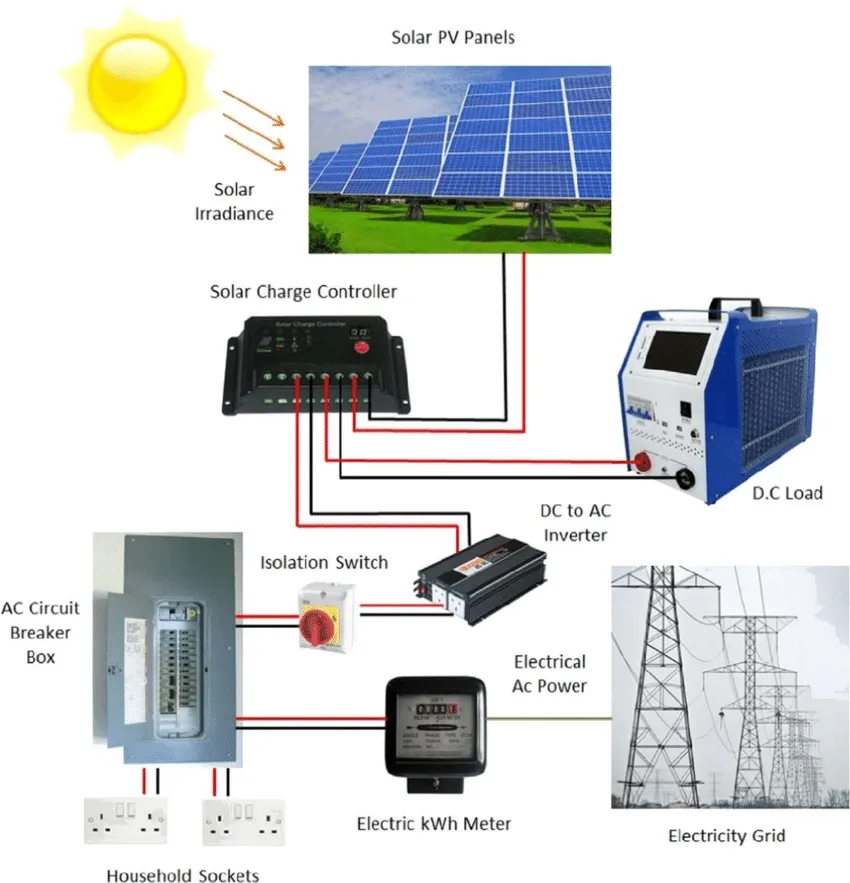
An Off-Grid solar system is completely independent. It has no connection to the electricity grid at all. Your solar panels and battery bank are your only source of power.
Here is how it works:
- Solar panels collect sunlight and generate electricity.
- This electricity goes into a charge controller, which manages how the batteries are charged.
- The batteries store the energy for use later — at night or on cloudy days.
- When you need power, the inverter converts the stored battery energy into usable electricity for your home.
The battery bank is the heart of an Off-Grid system. Without good batteries, you will run out of power when the sun goes down. This is why Off-Grid systems tend to cost more — batteries are expensive, but they are essential.
Off-Grid systems work best for:
- Homes or farms in remote areas with no access to the electricity grid
- Places that face very frequent and long power outages
- People who want full energy independence and zero reliance on utility companies
Off-Grid living requires a little more planning. You need to calculate your daily energy usage carefully so your battery bank is large enough to keep the lights on through the night or a few cloudy days.
On-Grid vs. Off-Grid — A Simple Side-by-Side Comparison
| Feature | On-Grid | Off-Grid |
|---|---|---|
| Connected to grid? | Yes | No |
| Needs batteries? | Usually no | Yes, always |
| Upfront cost | Lower | Higher |
| Power during outage? | No (standard) | Yes |
| Best suited for | Cities, suburbs | Rural, remote areas |
| Maintenance needs | Low | Moderate |
| Bill savings | Yes, via net metering | No bill at all |
The Role of an EPC Solar Company in Both Systems
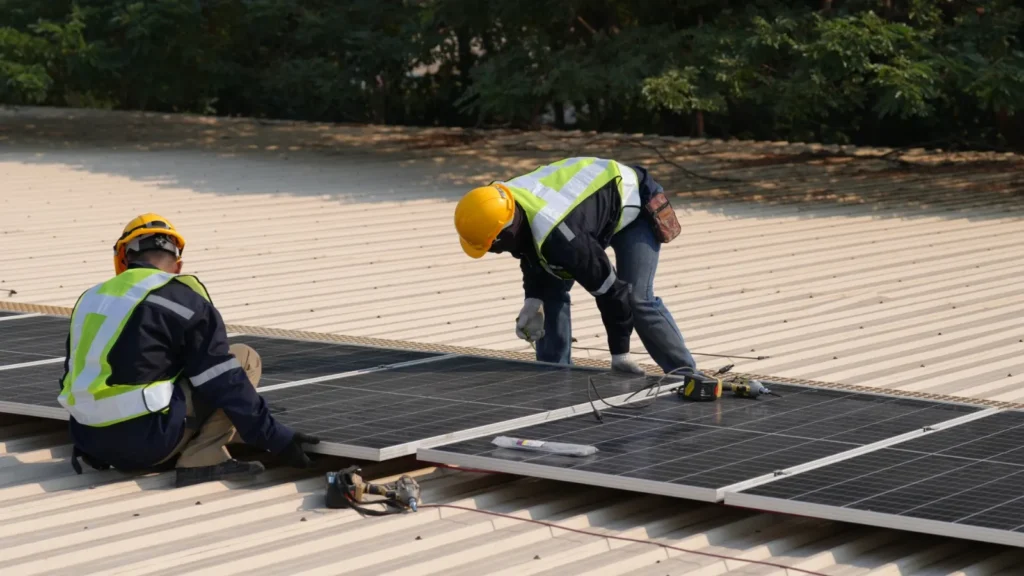
Whether you choose On-Grid or Off-Grid, an experienced EPC Solar company plays a huge role in the success of your system.
Here is what a good EPC Solar contractor does for you:
Design: They assess your energy usage, your roof or land space, your local sunlight levels, and your budget. Then they design a system that fits your specific situation — not a one-size-fits-all package.
Procurement: They source high-quality panels, inverters, batteries, and mounting structures. A trusted EPC Solar company will not cut corners with cheap equipment that fails in two years.
Construction and Installation: They handle all the physical installation work, wiring, safety checks, and government permits or approvals. You do not have to figure any of that out on your own.
After-Sales Support: Good companies also offer monitoring, maintenance, and warranty support after the system is installed.
Before you sign any contract, ask your EPC Solar company these three simple questions:
- How many years of experience do you have with this type of system?
- What equipment brands do you use, and what are the warranty terms?
- What does your after-sales service include?
How to Know Which System Is Right for You
- Do you have a reliable electricity grid in your area? If yes, an On-Grid system is likely sufficient and more cost-effective.
- How often do you face power outages? If outages are rare and short, On-Grid works fine. If they are frequent or long, Off-Grid gives you true independence.
- What is your monthly electricity bill? If your bill is high and the grid is available, On-Grid with net metering can cut that cost dramatically. If you have no grid access, Off-Grid is your only option.
- Do you have space and budget for battery storage? Batteries take up physical space and add significant cost. If your budget is tight and space is limited, On-Grid is easier to start with.
- Where is your property located? City or suburb? On-Grid. Remote village, farm, or hillside? Off-Grid is almost certainly the better choice.
Cost Breakdown
On-Grid Solar System:
An on-grid solar system for a normal Indian household usually costs between ₹1.5 lakh to ₹4 lakh, depending on system capacity and equipment quality. The main expenses include solar panels, inverter, mounting structure, wiring, and installation. Since on-grid systems do not require batteries, the overall cost remains lower. Homeowners can recover their investment through electricity bill savings and net metering benefits, usually within 4 to 6 years.
Off-Grid Solar System:
An off-grid solar system for the same home can cost around ₹3 lakh to ₹8 lakh or more, mainly because of the battery bank. Batteries are the most expensive part of an off-grid setup and may need replacement every 5 to 8 years depending on usage and battery type. Off-grid systems are ideal for areas with unreliable electricity supply or frequent power cuts, as they provide complete energy independence.
Government Subsidies:
In India, the government provides solar subsidies under residential solar schemes, which can reduce the initial investment by 20% to 40% depending on eligibility and state policies. It is always recommended to check with your local DISCOM or solar installer to understand the latest subsidy and net metering benefits available in your area.
Common Mistakes to Avoid
- Choosing Off-Grid when On-Grid is available — Many people assume Off-Grid is “better” because it sounds more independent. But if the grid is reliable in your area, going Off-Grid means paying a lot more for batteries you may not need.
- Underestimating battery capacity — If you go Off-Grid, make sure your battery bank is large enough for at least 2 to 3 days of backup power, not just one night.
- Picking a cheap EPC Solar contractor — Low price often means low quality. A poor installation can lead to system failures, safety hazards, and costs that wipe out your savings.
- Ignoring after-sales service — Ask who to call if something stops working three years from now. A good EPC Solar company stands behind its work long after installation day.
Understanding Which Solar System Fits Your Needs
Choosing between an On-Grid and Off-Grid solar system depends on your electricity availability, usage patterns, and long-term energy needs. Homes located in cities or areas with a reliable electricity supply usually benefit more from On-Grid systems because they help reduce electricity bills and require less maintenance. On the other hand, Off-Grid systems are more suitable for locations where electricity supply is limited or power cuts are frequent, as they provide stored energy through batteries.
Before installing a solar system, it is important to evaluate factors such as daily power consumption, available roof space, budget, and future electricity requirements. Proper planning helps ensure that the solar system performs efficiently and delivers consistent savings over many years.
Working with an experienced EPC solar provider also helps in selecting the correct system size, quality components, and safe installation practices, which ultimately improves system reliability and long-term performance.
Conclusion
Solar energy is one of the smartest decisions you can make today, for your home, your budget, and the environment. Whether you choose an On-Grid system to slash your electricity bills or an Off-Grid system for complete energy independence, the right choice starts with the right guidance.
That is exactly what UC Engineer is here for.
As a trusted EPC Solar company, UC Engineer handles everything, from system design and equipment to installation and after-sales support, so you never have to figure it out alone contact UC Engineer today for a free site assessment and honest expert advice tailored to your needs.